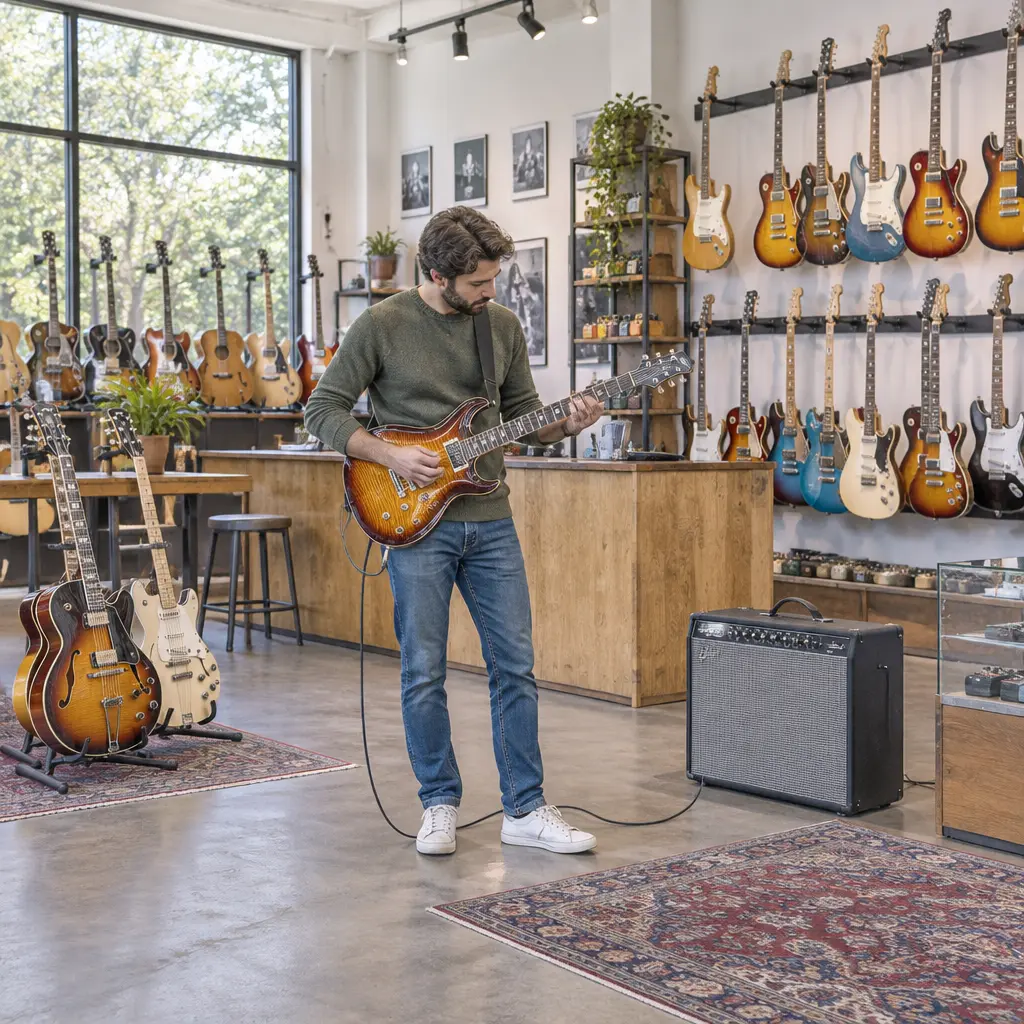
A high-end import guitar is an instrument made outside the buyer’s home country and sold in a premium price tier, typically offering upgraded materials, hardware, electronics, or manufacturing quality. For a beginner, it can be worth the cost if its feel, sound, and reliability make practice more enjoyable and the purchase fits the budget—but price alone does not guarantee faster progress. A sound decision compares imported and domestic models by setup, playability, durability, resale value, and total cost, while leaving enough money for essentials such as an amplifier, tuner, and lessons.
What a High-End Import Guitar Offers a Beginner
“Import” describes where a guitar is made, not a fixed quality level. A premium import may come from a company’s overseas factory, while a more affordable instrument may be built in the same country. Guitar makers and retailers commonly distinguish models by their specifications, production methods, quality control, and price—not by country of origin alone.
The high-end import category includes several kinds of instruments: premium production models with upgraded components, limited or artist editions, and boutique-style instruments made in smaller runs. For beginners, the most relevant comparison is usually between a well-made premium production guitar and a dependable mid-priced model. Features such as a comfortable neck, stable tuning, clean fretwork, and useful electronics matter more to early learning than prestige or rarity.
There is no universal price threshold for “high-end”; prices vary by brand, instrument type, market, and year. Instead of treating a label or price as proof of value, compare the guitar’s actual specification and condition with alternatives in the same price range.
Playability and setup
Playability means how comfortably and consistently a guitar responds to the player. It depends on factors such as action—the height of the strings above the frets—neck shape, fret ends, scale length, and setup. Fender’s beginner guidance and other manufacturer materials stress choosing an instrument that feels comfortable, while guitar technicians commonly note that proper setup can improve even an inexpensive guitar.
A premium instrument may arrive with better fret finishing or more consistent factory setup, but that is not guaranteed. A poorly adjusted expensive guitar can feel harder to play than a carefully set-up budget model. Before buying, test chords and single notes across the neck, listen for buzzing, and ask whether the retailer includes a setup or allows an adjustment after purchase.
Materials, hardware, and electronics
Premium imports may include higher-grade pickups, locking tuners, a more refined bridge, improved finishes, or particular woods and construction details. These features can affect tuning stability, tone, appearance, and ease of maintenance. Their value is personal: a beginner who plans to play amplified may appreciate quiet, versatile pickups, while a learner practicing acoustically may care more about comfortable string tension and body size.
No single wood or component automatically makes a guitar better for learning. Electric-guitar tone depends on the complete instrument and signal chain, including pickups, amplifier, playing technique, and effects. The useful test is whether the guitar produces sounds the buyer enjoys and whether its controls are understandable enough to encourage regular playing.
Reliability and quality control
Reliability is the guitar’s ability to stay playable and function consistently with ordinary care. Better hardware and inspection may reduce common annoyances, but any instrument can need adjustments as temperature and humidity change. Ask about the warranty, return period, local repair options, and availability of replacement parts. These practical protections can matter more to a new player than a small difference in specifications.
How the Guitar’s Cost Compares With Beginner Needs
The real cost of starting guitar is the full setup, not just the instrument. An electric guitar may require an amplifier, instrument cable, tuner, strap, picks, and a case; an acoustic guitar avoids the amplifier but still benefits from a tuner, picks, and a protective case. A professional setup or lesson budget may also be worthwhile.
A high-end import can make sense when the buyer can afford the guitar and the necessary supporting gear without taking on uncomfortable debt or sacrificing instruction and practice opportunities. If the premium price consumes the entire budget, a less expensive guitar plus a good setup, lessons, and reliable accessories may provide better value.
The practice-motivation benefit
An instrument that feels good and inspires its owner can encourage practice, which is essential for progress. The benefit is plausible but individual: there is no reliable general statistic showing that beginners who buy expensive guitars learn faster. A premium finish or desirable sound may increase enthusiasm, but it cannot replace consistent practice, feedback, and appropriately challenging material.
The best test is to play several guitars in person if possible. Notice whether the instrument makes it easier to form chords, whether its weight is comfortable, and whether its sound makes you want to pick it up again. A beginner buying online should use a retailer with a clear return policy and check the instrument promptly on arrival.
Resale value and depreciation
Resale value is the amount a guitar can reasonably sell for later. Established brands and popular models may be easier to resell than unfamiliar instruments, but used prices depend on condition, demand, and local market. New guitars generally should not be treated as investments: retail price does not guarantee that a later buyer will pay the same amount.
A used premium import can reduce the initial cost, provided the buyer checks the neck, frets, electronics, hardware, and structural condition. For a first purchase, buying from a shop that inspects used instruments or offers a return window can reduce the risk of an expensive repair.
When a High-End Import Guitar Is Worth It
A high-end import is most likely to be worthwhile when it is comfortable, fits the player’s musical goals, has dependable quality and support, and leaves room in the budget for the rest of the learning setup. It may also be a sensible choice for someone who has already tried cheaper instruments and knows which features matter to them.
- Choose the premium model if its comfort or sound is clearly better for you, not merely because it costs more.
- Compare its specifications and warranty with similarly priced domestic and imported alternatives.
- Include setup, accessories, amplification if needed, and possible repairs in the budget.
- Consider a mid-priced or used instrument if you are unsure whether guitar will become a lasting hobby.
- Prioritize a playable, well-adjusted instrument over cosmetic upgrades or collector features.
For example, a beginner committed to electric guitar may find a premium import with a comfortable neck and versatile pickups worth the expense if it encourages regular playing and can be serviced locally. Another beginner may progress just as well on a well-set-up mid-priced guitar and benefit more from using the savings for lessons. The right answer depends on the player, not the country stamped on the instrument.
Conclusion: Buy for Comfort, Value, and Commitment
A high-end import guitar can be an excellent beginner instrument, but it is not a requirement for learning and does not guarantee quicker progress. Its strongest advantages may be improved playability, components, finish, or sound—provided the individual guitar delivers those benefits and the price leaves room for essential gear and instruction. Compare specific instruments, test comfort, verify setup and warranty, and consider resale realistically. If you are shopping, try a premium model beside a well-reviewed mid-priced guitar and choose the one that makes you most eager to practice.
Sources: Fender, Beginner’s Guide to Buying a Guitar, https://www.fender.com/articles/how-to/beginner-guitar-buying-guide; Fender, Guitar Setup Guide, https://www.fender.com/articles/maintenance/how-to-set-up-a-guitar; Sweetwater, Guitar Buying Guide, https://www.sweetwater.com/insync/guitar-buying-guide/; Guitar Center, Guitar Buying Guide, https://www.guitarcenter.com/riffs/buying-guides/guitars/guitar-buying-guide