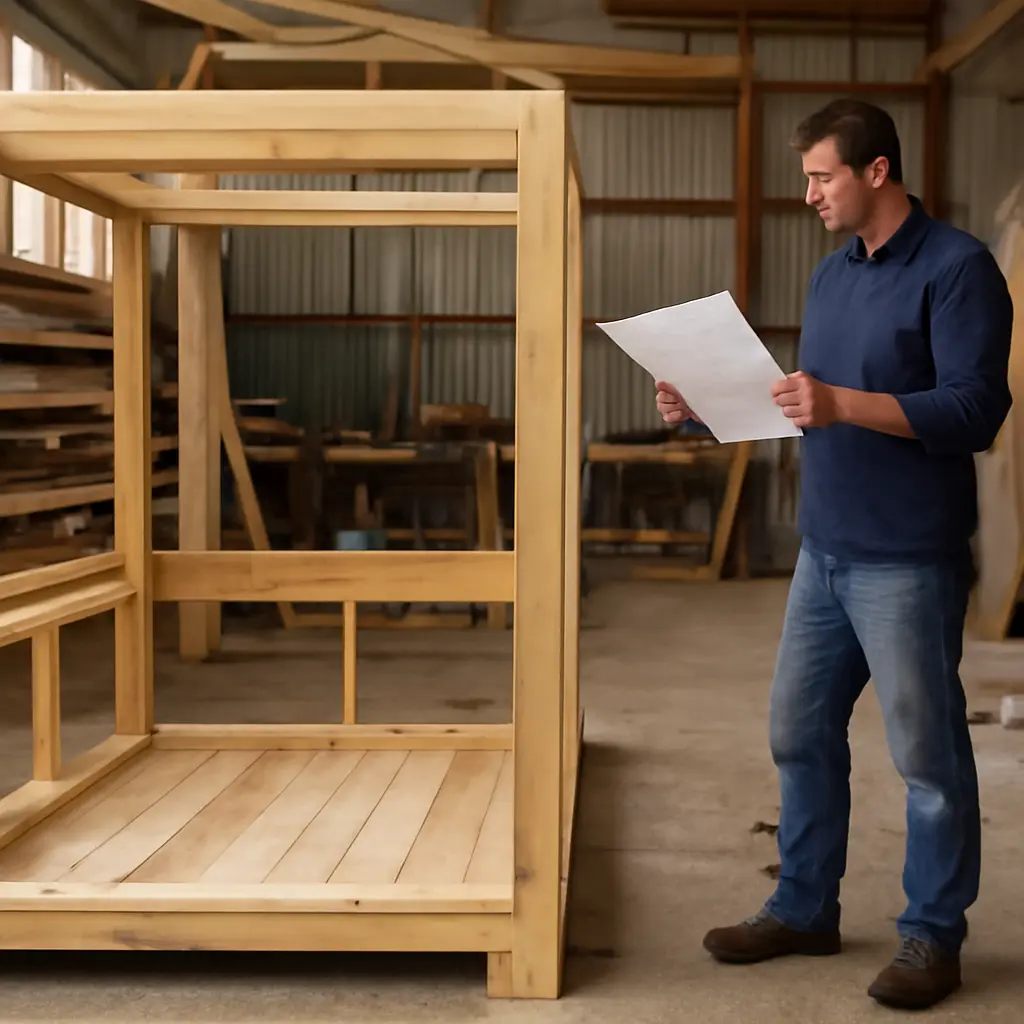
A six-month custom build is a project made to a buyer’s specifications and delivered on a planned half-year timeline. The wait is rarely six months of uninterrupted construction: it often includes design decisions, approvals, material ordering, production, transport, installation, and final corrections. Understanding those stages—and the costs, communication gaps, and schedule risks that accompany them—helps buyers set realistic expectations and protect their budget. Construction data show why planning matters: the U.S. Census Bureau reported that privately owned housing units authorized by building permits in 2023 took an average of about 10.1 months to complete, while custom products and smaller projects vary widely by industry.
What a Six-Month Custom Build Timeline Means
A custom build is a product or project designed, configured, or constructed around a client’s requirements rather than selected as a standard, ready-made item. The National Association of Home Builders describes custom homes as homes built to a client’s specifications, commonly on land the client owns. The same idea applies to custom furniture, vehicles, machinery, and other made-to-order goods, although their workflows and regulations differ.
The phrase “six months” usually names a target duration, not a guarantee that every step will take exactly six months. It may begin at contract signing, permit approval, deposit clearance, or release of final drawings. Buyers should ask which milestone starts the clock and whether the estimate includes delivery, installation, inspections, and punch-list work.
A timeline is a sequence of dependent stages
A schedule is a plan linking tasks, durations, and dependencies. For a custom build, the typical sequence is discovery and design, pricing and approvals, procurement, fabrication or construction, delivery, installation, and closeout. A delay in an early task can shift later work: for example, a late design approval may postpone ordering a long-lead component, which in turn leaves a production slot unused.
The U.S. Census Bureau’s 2023 Survey of Construction found that the average completion time for new privately owned residential buildings completed that year was roughly 10.1 months from authorization. That figure is not a forecast for every custom project, but it demonstrates that a six-month promise should be interpreted in light of project size, permitting, site conditions, and what “completion” includes.
The promised date and the usable date may differ
A promised completion date can refer to factory completion, shipment, installation, or final acceptance. These are different milestones. A building may be substantially complete while awaiting inspections or utility connections; a custom cabinet may leave the workshop but still need delivery and fitting. Ask for a written definition of completion and identify whether the schedule includes a buffer for inspection, commissioning, or corrections.
Why Custom Build Schedules Change
A schedule is an estimate shaped by uncertainty, not simply a countdown. The Project Management Institute’s project-management guidance emphasizes planning, monitoring, and managing risks throughout a project. In practical terms, the most common sources of change are decisions that remain open, approvals outside the builder’s control, hard-to-source materials, labor availability, site conditions, and revisions after work has begun.
Design decisions and change orders
A change order is a documented alteration to the agreed scope, price, or schedule. Changes made before fabrication may be relatively straightforward; changes after materials are cut or construction is underway can require rework, new parts, and resequencing. Even a seemingly small choice—such as changing a finish, appliance, dimension, or hardware specification—can affect procurement and installation.
To reduce avoidable slippage, request a decision schedule showing when selections must be finalized. Before approving a change, ask the builder to state its added cost, schedule effect, and any knock-on impacts in writing. This creates a clear record and helps distinguish a buyer-requested delay from a contractor or supplier delay.
Permits, inspections, and site conditions
For construction projects, local authorities may need to review plans, issue permits, and inspect work. The U.S. Census Bureau’s construction statistics treat authorization and completion as separate points in the housing process, underscoring that administrative steps are part of the real timeline. Review periods vary by jurisdiction and project complexity, so a builder’s estimate should identify who submits applications and who responds to corrections.
Unseen conditions can also change the plan. Examples include unsuitable soil, hidden damage, outdated wiring, or dimensions that differ from the drawings. A site visit, survey, and early feasibility review can expose some risks, but not all. Buyers should ask how contingencies are handled and what evidence is required before extra work is authorized.
Materials, suppliers, and production capacity
Long-lead items are components that take substantially longer than routine materials to order or manufacture. Specialty windows, imported finishes, custom machinery, and unique fixtures may govern the schedule even if most other work proceeds quickly. The U.S. Bureau of Labor Statistics’ Producer Price Indexes track price changes received by domestic producers, illustrating that input prices can move over time; however, an index is not a project-specific quote or a direct measure of a particular item’s availability.
Ask which items have been ordered, whether the supplier has confirmed a delivery window, and what substitute is acceptable if a product becomes unavailable. A credible schedule distinguishes confirmed dates from estimates and identifies the critical-path items—the tasks whose delay would directly push back the final date.
The Costs and Trade-Offs of Waiting
The wait can create costs beyond the contract price. Depending on the project, buyers may continue paying rent, storage, financing, insurance, or fees for temporary equipment. A delay can also expose the buyer to price changes if the contract does not lock in materials and labor. The relevant comparison is not simply “custom versus standard”; it is the total cost of the chosen solution, including the value of fit, durability, personalization, and time.
Budget for carrying costs and contingencies
A contingency is a reserve for uncertain but foreseeable costs. The appropriate amount depends on the project and contract; there is no universal percentage that safely covers every custom build. Ask the provider to identify exclusions, allowances, escalation clauses, storage or redelivery fees, and the process for approving extras. For a home project, also consider temporary accommodation, utilities, and financing costs if the completion date moves.
A useful budget separates fixed commitments from estimates. Record the base contract price, selected upgrades, taxes, delivery, installation, and a clearly labeled reserve. If the provider uses allowances for items not yet selected, confirm whether the allowance reflects a realistic market price and how overages or credits will be calculated.
Custom value versus opportunity cost
Opportunity cost is the value of the best alternative given up while waiting. A custom build may provide a better fit, specialized features, or a longer-lasting result, but a standard option may be available sooner. Compare the practical benefit of customization against the consequences of waiting, including missed seasonal use, business downtime, or the cost of temporary alternatives.
The right choice depends on what cannot be compromised. If a standard product meets the essential requirements, it may be sensible to choose it. If dimensions, performance, accessibility, or integration are critical, customization may justify the delay—provided the schedule and risks are transparent.
How to Manage the Six-Month Wait
Buyers cannot control every supplier or approval, but they can make the process more observable. Agree on milestones, decision deadlines, update frequency, and escalation procedures before work begins. The goal is not to demand false precision; it is to identify problems early enough to respond.
Put scope, milestones, and responsibilities in writing
The contract and project schedule should explain what is being delivered, what is excluded, who supplies each item, and which approvals are required. A milestone schedule might include approved drawings, permit issuance, material confirmation, start of fabrication, production completion, dispatch, installation, inspection, and final acceptance. For each milestone, ask for an expected date and the evidence that it has been achieved.
- Confirm the event that starts the six-month clock.
- List buyer decisions and their deadlines.
- Identify long-lead materials and responsible suppliers.
- Define how schedule changes and change orders are approved.
- Clarify payment milestones, cancellation terms, warranties, and remedies for delay.
Use regular updates to verify progress
A progress update is useful when it reports completed work, next steps, open decisions, risks, and changes to the forecast—not merely that the project is “on track.” A short written update every week or two may be appropriate for an active project, while a longer procurement phase may need less frequent updates. Agree on a cadence that matches the project’s pace.
If a date slips, ask what caused the change, which downstream milestones are affected, what recovery options exist, and whether those options alter cost or quality. A realistic revised forecast is more useful than repeated assurances that fail to identify a cause or corrective action.
Inspect, document, and close out carefully
Before final acceptance, compare the delivered work with the approved specifications and record defects or incomplete items in a punch list. Keep copies of drawings, selections, invoices, change orders, inspection records, manuals, and warranty documents. For regulated construction or complex equipment, confirm that required inspections, commissioning, and safety documentation are complete before treating the project as finished.
A case in point is a custom home: “substantial completion” may allow the owner to use the property while a limited list of work remains, but it does not necessarily mean every contractual obligation is complete. The same distinction applies to a bespoke product that has shipped but still requires installation or adjustment.
Conclusion: Make the Wait Measurable
Waiting six months for a custom build means navigating a chain of design choices, approvals, procurement, production, delivery, and closeout—not simply waiting for an item to appear. The timeline can move because of changes, permits, site conditions, supplier lead times, and the gap between production completion and usable delivery. National housing data, including the Census Bureau’s roughly 10.1-month average for new homes completed in 2023, reinforces that construction duration depends heavily on scope and process.
Before committing, define the start and finish dates, review exclusions and contingencies, and require milestone-based updates. During the build, document decisions and respond promptly to requests. If you are considering a custom project, ask the provider for a written schedule with confirmed versus estimated dates, then compare the customization’s value with the financial and practical cost of waiting.
Sources: U.S. Census Bureau, Survey of Construction: Average Time to Completion, 2023, https://www.census.gov/construction/nrc/pdf/avg_starttocomp.pdf; National Association of Home Builders, What Is a Custom Home?, https://www.nahb.org/blog/2020/03/what-is-a-custom-home; Project Management Institute, A Guide to the Project Management Body of Knowledge (PMBOK® Guide), https://www.pmi.org/pmbok-guide-standards/foundational/pmbok; U.S. Bureau of Labor Statistics, Producer Price Indexes, https://www.bls.gov/ppi/